
How do you choose the perfect corporate gift for a client?
Choosing the perfect corporate gift starts with understanding your customer and the value of your relationship. A good business gift combines personal relevance with practical use, shows appreciation without being excessive and matches your corporate values. The choice depends on your budget, the type of client and the message you want to convey. By focusing on quality, personalization and durability, you create a gift that truly impresses.
What makes a corporate gift truly valuable to your client?
A valuable corporate gift has four key characteristics: personal relevance, practical use, good quality and emotional value. The gift should match your client's interests or needs, be used regularly and be a positive reminder of your partnership.
Personal relevance means tailoring the gift to what your customer values. A consultant who travels a lot appreciates a high-quality travel mug differently than an office worker who works primarily on location. It's about showing that you know and understand your client.
Practical use keeps the gift from disappearing into a drawer. Consider items that people can use daily, such as drinking bottles, notebooks or desk accessories. The more often someone uses the gift, the stronger the positive association with your company becomes.
Quality determines the impression you leave. A cheap-looking gift can do more damage than giving no gift at all. Invest rather in fewer gifts of better quality than many cheap alternatives.
How do you determine the right budget for a corporate gift?
You determine the right budget for a corporate gift based on three factors: the value of the client relationship, the nature of your partnership and the expectations in your industry. A good guideline is 0.5% to 2% of the annual sales you make with that client, but this can vary from situation to situation.
For strategic clients who generate a lot of sales, your budget may be higher. For new relationships that you want to develop, invest differently than for existing loyal customers. Think about what you want to achieve: show appreciation, celebrate a new partnership or make excuses for a problem.
Different industries have different standards. In the financial sector, expectations are often higher than in the nonprofit sector. Check with peers or industry associations about what is common in your market.
Don't forget to factor in the total cost: the gift itself, personalization, packaging and shipping. Plan your budget so you can be consistent in your choices, as customers often compare what they get from different vendors.
What corporate gifts work best for different types of clients?
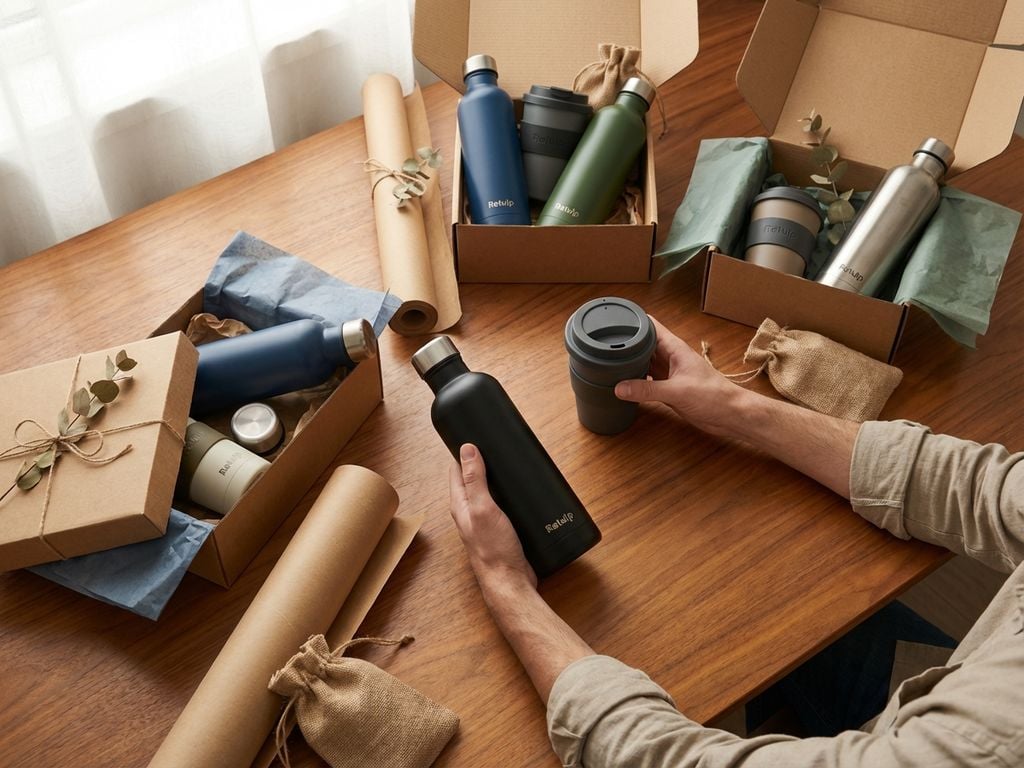
Different customer types appreciate different types of gifts. Business decision makers like practical, high-quality items that support their professional image. Think premium writing instruments, elegant drinking bottles or stylish desk accessories.
Creative professionals often appreciate unique, aesthetically pleasing gifts that reflect their personalities. Colorful notebooks, unusual coffee mugs or items with a story behind them appeal to them.
Technical experts focus on functionality and innovation. They appreciate gifts that are cleverly designed, sustainably made or contain a technical gadget. High-quality thermos cups or multifunctional accessories score well.
For clients in healthcare or education, gifts that reflect their social commitment work. Sustainable products with a social impact, such as reusable drinking bottles that contribute to clean drinking water projects, fit their values perfectly.
Avoid generic gifts such as cheap pens or standard corporate gifts that everyone gives. Also, overly personal items, such as clothing or perfume, are usually not a good idea unless you know the customer very well.
Why is personalization so important in corporate gifts?
Personalization makes a gift unique and shows that you have invested time and effort in that specific customer. Personalized gifts are 70% more likely to be kept and create a stronger emotional connection between your company and the recipient.
The psychology behind personalization is simple: people love items made just for them. It activates feelings of ownership and appreciation. A water bottle with your customer's name on it feels different than a standard corporate gift.
There are different levels of personalization. Simple options include engraving a name, adding initials or including a personal message. More advanced personalization can mean tailoring the gift to the customer's hobbies, preferences or corporate colors.
Don't overdo personalization. A subtle engraving or elegant print works better than bold colors or large logos. The gift should remain useful in a variety of situations, even outside the business context.
Also consider practical personalization: a thermos cup in the right size for someone who drinks a lot of coffee, or a water bottle with the right volume for an athlete. This type of personalization shows that you have really thought about your customer's needs.
How do you make sure your corporate gift is sustainable and responsible?
Sustainable corporate gifts are becoming increasingly important as companies and consumers become more conscious of environmental impact. A sustainable gift is made from eco-friendly materials, has a long lifespan and contributes to reducing waste rather than increasing it.
Choose materials such as recycled stainless steel, sustainable wood or BPA-free plastics. Avoid disposable products or items that break easily. A high-quality reusable water bottle replaces hundreds of plastic bottles and shows your commitment to sustainability. For businesses looking to package their lunches more sustainably, there are also innovative solutions such as reusable lunch bags and food wraps that replace plastic cling film.
Look for certifications and labels that confirm sustainability. Many suppliers can demonstrate how their products contribute to environmental goals, such as reducing plastic waste or supporting social projects.
Sustainable gifts fit perfectly with modern corporate values and help your organization meet CSR goals. They show that you think beyond the business relationship and also take social responsibility seriously.
Communicate the sustainable aspects of your gift to your customers. Tell the story behind it: how much plastic it saves, what charity it supports or how it was made. This increases appreciation and strengthens the positive association with your company.
How we help choose the ideal business gift
We understand that choosing the perfect corporate gift can be challenging. That's why we offer personalized consultation to find the ideal gift that fits your customers, budget and company values. Our process always begins with understanding your goals and the characteristics of your customer group.
Our approach includes:
- Personal consultation on your target group and budget
- Selection of high-quality, sustainable products
- Extensive personalization options, from simple engraving to full customization
- Transparent communication about the social impact of each gift
- Full-service delivery and packaging
All of our corporate gifts are made from sustainable materials and help reduce plastic waste. Plus, for every product sold, we donate drinking water to people in developing countries, so your gift has a double impact.
Want to know what options would best suit your organization? Contact us for a no-obligation consultation. We will be happy to help you choose corporate gifts that really impress and contribute to your business goals.
Frequently Asked Questions
When is the best time to give business gifts?
The best time depends on your objective. For appreciation, give gifts around important milestones, such as the conclusion of a major project or at the end of the year. For new relationships, you can give a gift after the first successful collaboration. Avoid busy periods such as the first weeks of January or right before vacation periods when your gift will receive less attention.
How do I prevent my corporate gift from being perceived as a bribe?
Adhere to your client’s compliance rules and stay within reasonable limits in terms of value. Give gifts transparently, document them if necessary, and opt for practical items rather than luxury gifts. A good rule of thumb: if you can present the gift openly in front of colleagues, it’s probably appropriate. When in doubt, ask about your client’s gift policy in advance.
What do I do if a customer doesn't seem to appreciate my promotional gift?
Not every customer responds the same to gifts, and that's normal. Focus on the intent behind the gift: showing appreciation. If you find that certain customers do not respond to physical gifts, consider alternatives such as a personalized thank-you letter, a donation to charity on their behalf, or an invitation to a valuable networking event.
Should I give the same gift to all customers within one company?
It depends on the organizational structure and your relationship with different people. For equal contacts, consistency is important to avoid jealousy. For different levels (for example, a buyer versus a director), you can tailor gifts to their role and the value of your partnership, but keep in mind company culture and possible sensitivities.
How do I package corporate gifts for international clients?
Consider cultural differences and local customs. In some cultures, gifts are very important; in others, they can be inconvenient. Inquire about local traditions, avoid items that may be religiously or culturally sensitive, and pay attention to colors that have different meanings. Consider neutral, universally valued gifts such as high-quality drinking bottles or desk accessories.
Can I deduct corporate gifts as business expenses for tax purposes?
In the Netherlands, business gifts up to €50 per person per year are fully deductible as business expenses. Above this amount, you pay 26% tax on the excess. Keep good records with names, amounts and business relationship. For gifts above €50, you must also consider possible tax liability for the recipient. Consult your accountant for specific situations.
How do I measure the success of my corporate gift strategy?
Measure success by concrete goals: increased customer loyalty, more repeat business, positive feedback or strengthened relationships. Track metrics such as customer retention, Net Promoter Score, or number of positive comments. Solicit direct feedback from customers about the gifts and note whether they actually use the items. A simple follow-up email or phone call can provide great insight into appreciation.
Related Articles
- Can a leak-proof stainless steel thermo bottle be engraved with a company logo or personal text?
- How do you choose gifts that fit your company's values?
- How do you make sure your corporate gift stands out in the market?
- Which personalized gifts impress business associates the most?
- What business gifts under 20 euros impress?

