
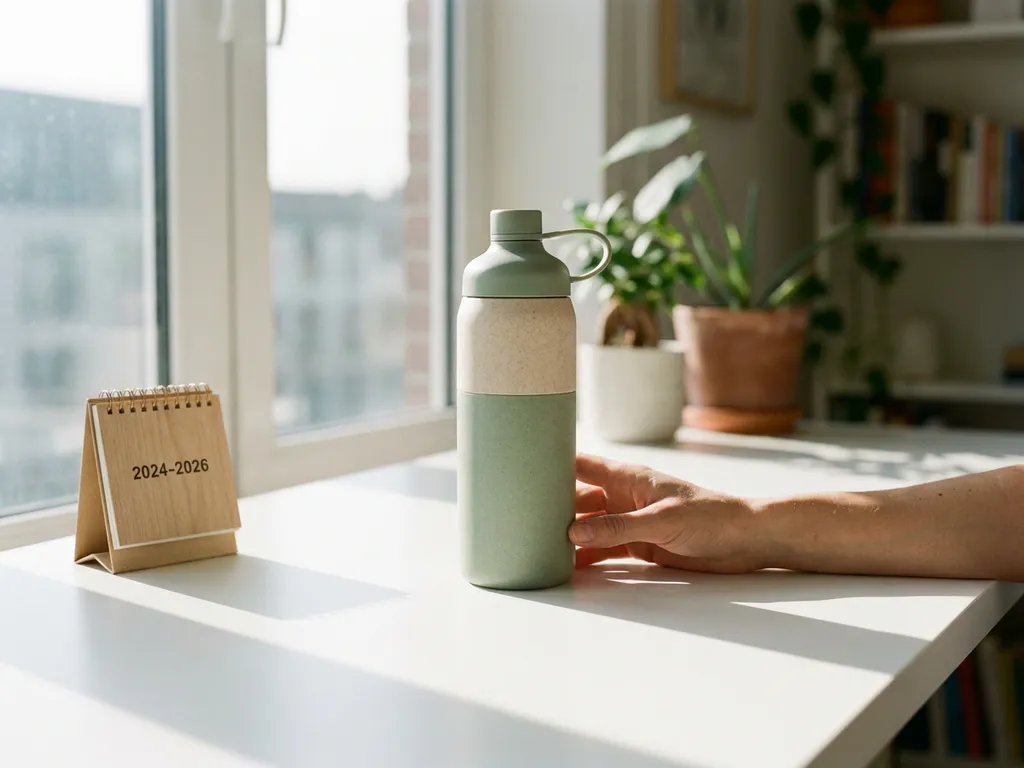
How long does an organic sports water bottle last and what does that say about its value as a business gift?
A bio sports water bottle lasts an average of 6 to 12 months with daily use, depending on the material and diligence of maintenance. This relatively short lifespan makes organic water bottles especially valuable as business gifts: they offer organizations a sustainable way to regularly refresh their brand message while contributing to environmental goals.
Why do companies waste money on gifts that remain invisible for years?
Traditional corporate gifts such as metal water bottles often disappear into office drawers and go unused for years. Employees get them, put them away and then forget about them. The result? Thousands of dollars in marketing budgets that don't generate visibility or create brand recall. Bio water bottles break this pattern through their natural replacement cycle. Because they need to be replaced after 6 to 12 months, they remain in active use and provide continuous brand exposure. Organizations can adapt their gift strategy by handing out new organic water bottles annually, keeping their logo and message always visible to employees and associates.
How does excessive gift longevity leave opportunities for brand reinforcement?
Sustainable gifts that last ten years seem cost-effective, but miss crucial moments for brand reinforcement and relationship management. Once a gift is given, the opportunity to reconnect and deepen the relationship disappears. Organic water bottles create natural contact moments through their replacement cycle. Companies can release a new edition each year with custom designs, seasonal colors or updated brand messages. This keeps the brand relationship alive and provides regular opportunities to re-emphasize values such as sustainability and innovation. The shorter lifespan thus becomes a strategic advantage rather than a constraint.
✉ Request price list →What is an organic sports water bottle and how is it different from regular water bottles?
A bio sports water bottle is a drinking bottle made from biodegradable materials such as sugar cane, rather than traditional plastics or metals. The main difference is in the composition: where ordinary plastic bottles are made from petroleum-based materials that take hundreds of years to degrade, bio water bottles consist of plant-based raw materials that are completely biodegradable within a few years.
Bio water bottles are completely BPA-free and contain no harmful chemicals that can leach into beverages. They feel like traditional plastic bottles but have a natural texture that is pleasant to the touch. In terms of functionality, they offer the same ease of use as regular sports water bottles: they are lightweight, often have a sports cap for easy drinking during activities, and are suitable for different types of beverages such as water, fruit juices and sports drinks.
The manufacturing process of organic water bottles has significantly lower CO2 emissions than traditional plastic bottles. Where regular bottles rely on fossil fuels, bio water bottles use renewable plant-based resources. This makes them an attractive choice for organizations looking to reduce their environmental impact without sacrificing functionality.
How long does an organic sports water bottle last on average with daily use?
With daily use, an organic sports water bottle lasts an average of 6 to 12 months, depending on the intensity of use and care with which it is handled. This is considerably shorter than stainless steel water bottles that last for years, but fits perfectly with the goal of biodegradability.
Longevity depends greatly on the pattern of use. For intensive sports use, where the water bottle regularly falls or bumps against hard surfaces, the lifespan may shorten to 4 to 6 months. For office use, where the water bottle is mainly on the desk and occasionally goes to meetings, this period can go up to 8 to 12 months.
Importantly, organic water bottles maintain their functionality throughout the period of use. They do not suddenly become leaky or unusable, but show gradual signs of wear such as small scratches or a matte sheen. The sports cap will continue to function properly throughout its life, provided it is cleaned regularly according to the recommended maintenance instructions.
After the end of the usage period, bio water bottles can be composted or disposed of through the MSW, where they fully degrade into natural components within 2 to 5 years without leaving harmful residues.
What factors determine the lifespan of an organic drinking bottle?
The lifespan of a bio drinking bottle is determined by several factors, with the method of use having the greatest influence. Frequency of use plays a crucial role: a water bottle that is used daily wears out faster than one that is used only occasionally. The type of activities in which the bottle is used also determines wear. Sports activities, outdoor use and transportation in bags cause more mechanical stress than office use.
The quality of maintenance directly affects longevity. Bio water bottles should be rinsed after each use and thoroughly cleaned regularly with warm water and detergent. Using a dishwashing brush to reach all corners prevents bacterial growth and extends the useful life. Importantly, bio water bottles should always be washed by hand, as the high temperatures in dishwashers can damage the organic material.
Environmental factors such as temperature and humidity also affect shelf life. Extreme temperatures, both heat and cold, can cause the material to degrade faster. Storing the water bottle in a cool, dry place when not in use helps maximize its life.
The type of beverage used also plays a role. Water and light fruit juices are the least stressful, while acidic drinks or those high in sugar can damage the material more quickly. Dairy products require extra careful cleaning to prevent bacterial growth that can damage the material.
Why exactly is the limited lifespan of organic water bottles an advantage for corporate gifts?
The limited life of organic water bottles creates unique advantages for corporate gifts that traditional sustainable alternatives cannot offer. First, the natural replacement cycle provides regular brand exposure. Whereas a stainless steel water bottle is given once and then remains invisible for years, organic water bottles offer the opportunity to reconnect with employees and associates annually.
This cycle fits perfectly with modern marketing strategies that bet on regular touchpoints. Companies can release a new edition each year with updated designs, seasonal colors or new brand messages. This keeps the brand relationship alive and provides opportunities to communicate evolving policies around sustainability and corporate values.
For HR departments, the replacement cycle offers practical benefits in employee appreciation. Instead of one large gift, they can structurally invest in smaller, regular gifts that show continuous appreciation. This better suits modern employee preferences for recognition and fits with organizations' budget cycles.
Biodegradability also supports sustainability goals in an authentic way. Organizations can demonstrate that they not only talk about sustainability, but also act by choosing products that do not create a permanent waste stream. This strengthens the credibility of sustainability communication toward stakeholders.
How do you calculate the total value of an organic sports water bottle as a corporate gift?
The total value of an organic sports water bottle as a corporate gift goes beyond the purchase price and includes several measurable and unmeasurable elements. Start with the direct cost: organic water bottles cost on average between 4.85 and 7.50 euros each including printing, depending on the number and personalization.
Then calculate the brand exposure value by multiplying the number of uses by the visibility. On average, an organic water bottle is used for 200 days at 3 to 5 visible moments per day, resulting in 600 to 1,000 brand contacts per gift. Compare this to traditional advertising spending per contact to determine relative value.
The sustainability value can be quantified by calculating the CO2 reduction. Each organic water bottle replaces an average of 150 disposable cups or plastic bottles over its lifetime. With an average CO2 savings of 0.1 kg per disposable product replaced, one bio water bottle yields 15 kg of CO2 reduction. At current CO2 offset rates of about €25 per ton, this represents an environmental value of about €0.38 per water bottle.
Add to this the relational value: the regular nature of organic water bottle gifts creates more contact moments than one-time gifts. This results in stronger brand loyalty and higher employee or relationship satisfaction, which translates into lower turnover or churn costs. The total value of a bio sports water bottle as a business gift is thus 2 to 3 times the purchase price when all factors are taken into account.
How Retulp helps with sustainable corporate gifts
We offer a complete range of organic water bottles and other sustainable drinking solutions that perfectly fit your gift strategy. Our organic water bottles are made from sugarcane and completely BPA-free, with personalization options that reinforce your brand identity.
Our benefits for corporate clients:
- All-in prices from 300 pieces with no hidden costs
- Full personalization with logos and brand messages
- Fast delivery times and reliable service
- Extensive selection of water bottles, thermos and food wraps
- Measurable sustainability impact through donations to clean drinking water projects
Explore our full range at retulp.co.uk, request a price list for your specific requirements, or contact us for personal advice on the best sustainable gift solution for your organization.
Frequently Asked Questions
How do I plan an annual replacement strategy for organic water bottles in my organization?
Start by setting an annual budget and choose a set time such as the New Year or Earth Day for issuance. Create a schedule with different designs by season or department, and communicate the replacement cycle to employees in advance so they know when to expect a new water bottle.
What should I do if employees get their organic water bottle broken earlier than expected?
Keep a small buffer of 10-15% extra water bottles in stock for replacements. Communicate clearly that normal wear and tear after 6-12 months is normal, but that damage due to improper use does not automatically trigger replacement. This prevents abuse while remaining lenient in the event of real accidents.
Can organic water bottles be personalized without disturbing biodegradability?
Yes, modern printing techniques such as digital printing and organic inks do not affect degradability. However, avoid metal parts or plastic stickers that are not biodegradable. Always ask about the composition of printing and choose fully compostable options.
How do I effectively communicate the sustainability benefits of organic water bottles to employees?
Use concrete numbers: mention how many disposable cups each water bottle replaces (about 150) and the CO2 savings (15 kg per water bottle). Make the impact visual with infographics and share regular updates on the overall environmental impact of your organic water bottle program.
Is it cost effective to hand out new organic water bottles annually compared to one-time stainless steel bottles?
While the annual cost may seem higher, organic water bottles offer more brand exposure (600-1000 contacts vs. a few dozen with stainless steel), regular relational touchpoints, and measurable sustainability impact. Total value per brand contact is often lower than traditional marketing.
How do I ensure used organic water bottles are disposed of properly?
Place clear instructions on the water bottle itself or in accompanying communications. Organic water bottles can go in the garbage or compost, but not in plastic waste. Consider placing collection points in the office where employees can turn in old water bottles for proper disposal.
What trends should I follow when designing annual organic water bottle editions?
Take into account seasonal colors (such as shades of green for spring and warm tones for fall), sustainability trends like circular economy symbols, and company-specific milestones. Minimalist design works well because it’s timeless, while subtle year markings (such as “2024 edition”) create a sense of exclusivity.
Related Articles
- Which employee gifts support a good cause?
- What kind of original gifts suit a modern employer?
- How is a bio sports water bottle made, and what makes the material more sustainable than regular water bottles?
- What’s the difference between having a water bottle printed or engraved as a promotional gift?
- Why is an organic sports water bottle a strong calling card for companies with sustainability aspirations?

